
Can You Become a Millionaire in 5 Years? Here’s the Brutally Honest Answer

Disclosure: this article may contain affiliate links, which means I may earn some small commissions if you make a purchase through them, at no additional cost for you.Becoming a millionaire in five years is possible. It happens every day.
But it’s not the result of luck, motivation, or manifesting. It’s the product of very specific decisions, repeated consistently, under pressure, without distractions.
And most people are not willing to do what it actually takes.
The Math Is Simple…The Execution Isn’t
To reach one million in five years, you need to generate and keep around $200,000 per year on average.
That doesn’t mean earning $200,000 from a job (if you want to become a millionaire through your job you need to make more considering your expenses, taxes you’ll have to pay, etc).
You need to build something that can produce that level of income or scale toward it quickly.
Saving your way there with a normal salary is unrealistic unless you already earn at the top 1%. The path is almost always tied to leverage.
Leverage means using tools, systems, or people to multiply your output. This is why people who reach that level fast stop trading time for money. They build assets instead.
Let’s talk about the most realistic ways this actually happens (excluding luck like winning the lottery).
First of All, Educate Yourself
This part doesn’t look exciting, I know.
You can skip to the next if you want, but you would leave money on the table because this is what changes everything.
Because the more you know about money, the more you generate.
As simple as that.
If you’re trying to build wealth without understanding how money, business, and leverage actually work, you’ll move slower than necessary and make avoidable mistakes.
To put it another way, if you skip the education phase, you’ll lose money because you don’t have the right knowledge and mindset.
The goal is not to consume random content but to expose yourself to the right ideas and mindset until your thinking starts to shift.
That’s why truly rich people, those who reach high levels of wealth almost always have one thing in common: they’ve taken the time to understand how the game really works. And they keep learning.
They’re the ones you see flying first class reading that fancy money book.
So instead of consuming random content, be intentional about what you learn.
Below you’ll find a curated list of resources, including books and people/pages worth following, that can help you think differently, move faster, and avoid common mistakes.
Go through them slowly, apply what makes sense, and focus on what actually moves you forward.
First, here are some people you should follow on social media so that you can learn fast (for free):
- Ramit Sethi (on X, former Twitter) – I also recommend his Netflix docuseries
- Steve – Millionaire Habits (on X, former Twitter)
- Alex Hormozi (you can follow him on any social)
- Leila Hormozi (same as Alex, her content is more motivational and about leadership)
Then, from experience, I can tell you these are hands down some of the best books you can read to educate yourself quickly about money and wealth:
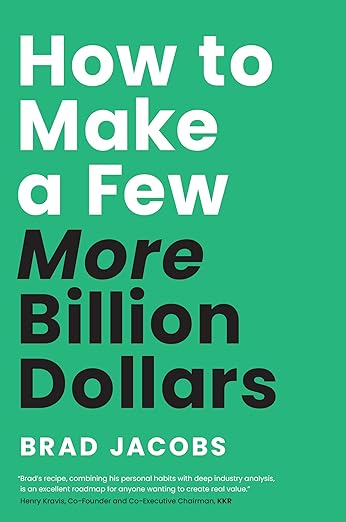
1: How to Make a Few More Billion Dollars
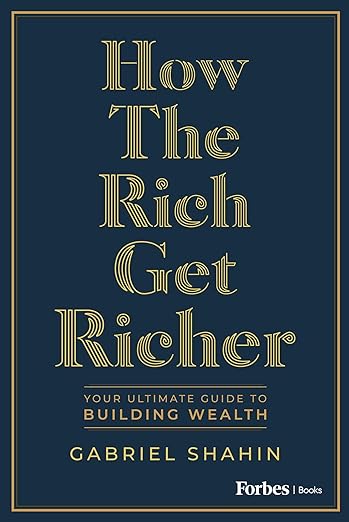
2: How the Rich Get Richer: Your Ultimate Guide to Building Wealth
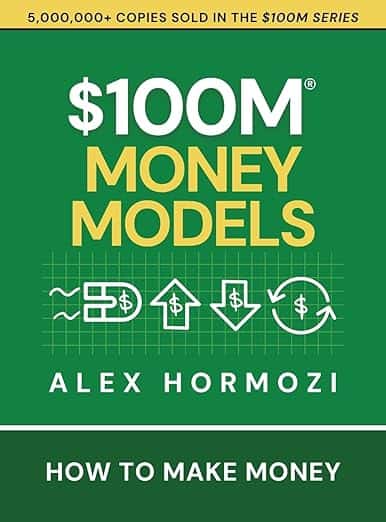
3: $100M Money Models: How To Make Money
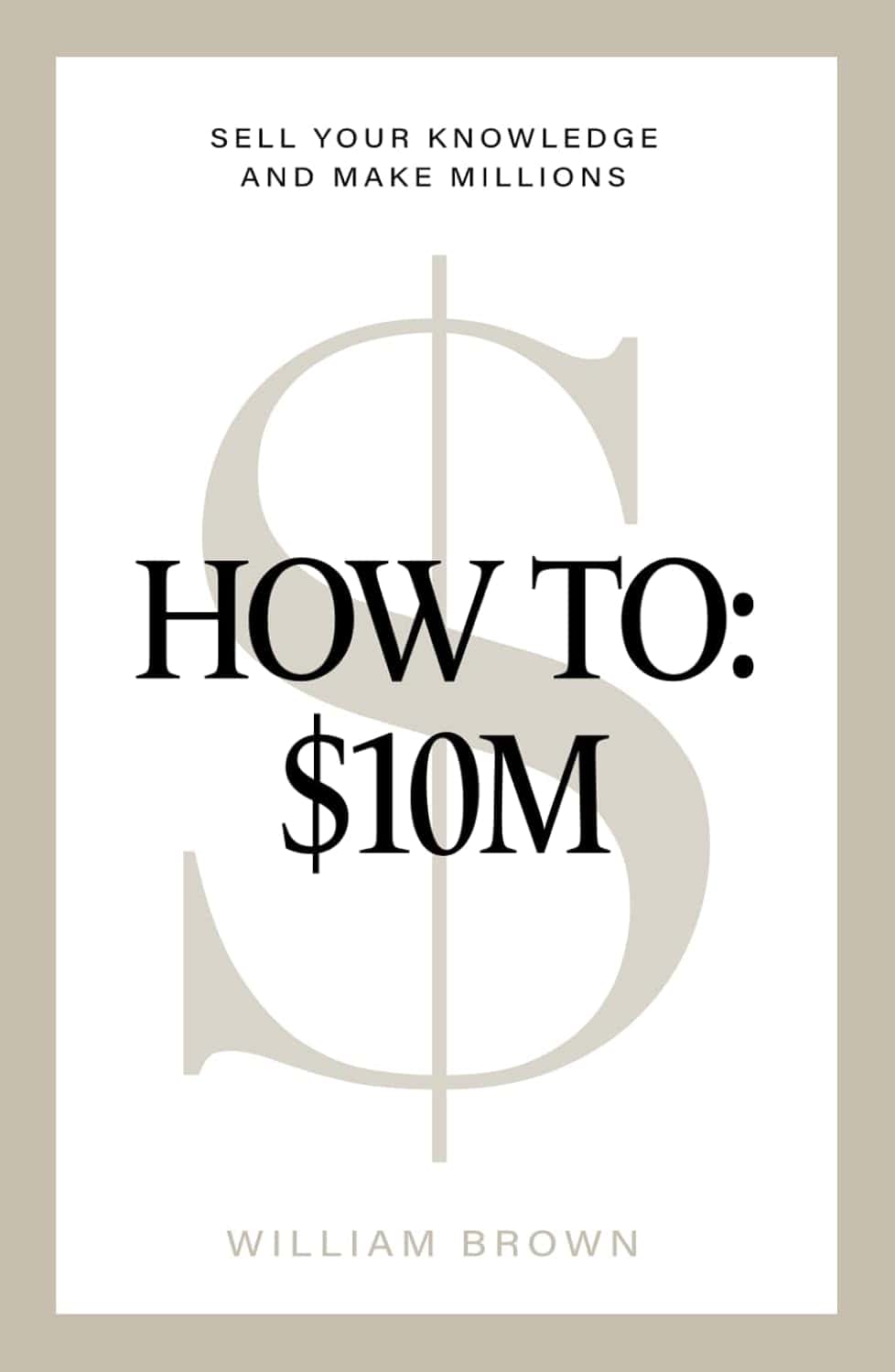
4: How To: $10M: Sell Your Knowledge And Make Millions
Now that you have the right resources, let’s get to the realistic paths you can choose to become a millionaire.
Building a Business and Scaling It
This is the most direct path to make millions (in some cases billions).
Now, this is definitely not the easiest path…but, in my opinion, the most straightforward.
You build something that makes money, then you grow it by increasing output without increasing your effort at the same pace.
That’s what scaling actually means. Not working more.
But by using money, people, and tools to produce more results.
At the beginning, you do everything yourself. But that phase should be temporary.
Once something works, your job is no longer to do the work.
Your job is to amplify what’s already working.
Here are some examples:
Scaling With Ads (Buying Growth)
This is one of the fastest ways to scale. Let’s say you’re selling a digital product for $20.
You test ads and realize:
You spend $10 on ads and you make $20. So you profit $10 per sale.
Now you have something that works. Most people stay small here. But scaling is simple.
If $10 in ads makes you $20, then $100 in ads can make you $200.
$1,000 in ads can make you $2,000. $10,000 in ads can make you $20,000.
Same system. Just more volume.
Of course, it’s not always perfectly linear.
Costs can increase. Performance can fluctuate.
But the principle stays the same.
If you can profitably acquire customers, you can scale by increasing spend.
That’s why businesses reinvest. Instead of taking all the profit, you put a large part of it back into ads.
That’s how you grow fast.
Scaling With People (Buying Back Your Time)
At some point, your time becomes the bottleneck.
You can’t serve more clients, create more content, or run more campaigns because you’re already at capacity.
This is where hiring comes in.
So for example, let’s go back to a service business.
You’re making $20k/month doing everything yourself. And you’re stuck because you can’t make more.
Imagine you hire someone for $1k-2k/month to handle part of the work.
Suddenly you free up time.
Now you can take on more clients.
If that allows you to go from $20k to $35k/month, that $2k hire just made you an extra $15k.
That’s scaling.
You’re using money to remove your bottleneck. You can repeat this.
Hire for delivery. Hire for admin. Eventually hire for growth, like sales or ads.
Each hire should either give you back time or increase output.
Scaling With Tools (Speed and Efficiency)
Tools don’t just make things easier.
They make things faster and more consistent.
Let’s say you’re running a content-based business.
Without tools, you write manually, design manually, schedule manually.
Everything takes time.
Now you start using tools.
Scheduling tools for content. Automation tools for emails. Templates for designs.
You reduce the time per task.
So instead of creating 5 pieces of content per week, you create 20.
More content means more reach, more traffic, more money. Same effort. Better systems.
That’s scaling through efficiency.
Scaling Through Distribution
Another way to scale is simply reaching more people.
Let’s say your product converts well.
If 100 people see it, maybe 2 buy.
If 10,000 people see it, now 200 buy.
Same product. Same offer.
The only difference is exposure.
This is why distribution matters so much.
You can scale by posting more content, expanding to more platforms, running ads, or building an email list.
More eyes means more opportunities to sell.
Scaling Through Pricing
This is the simplest lever, and most people ignore it.
If you charge $100 and sell 100 times, you make $10,000.
If you charge $200 and sell 100 times, you make $20,000.
Same work. Double the revenue. Of course, you need to justify the price. And it might take more to sell double the price.
But if your product/service is really great at solving a problem, it will work. Trust me on that.
What Scaling Really Looks Like
At the beginning, you work and you get paid.
After scaling, systems run, people help, money is reinvested, and output increases.
Your role changes. You stop being the one doing everything.
You become the one deciding where to invest, what to improve, and what to scale.
The Real Shift
Most people stay stuck because they think they need to work more to make more.
But scaling is the opposite.
You use money, people, and tools to produce more without increasing your effort at the same pace.
That’s how a $5k/month business becomes $50k/month.
Not by working harder. But by building something that can grow beyond you.
Building a Business and Selling It

This is where the timeline compresses the most.
Instead of trying to personally “earn” one million over time, you focus on building something that is worth one million, then you sell it.
That shift changes everything. You stop thinking like someone who gets paid and start thinking like someone who builds assets.
Buyers don’t care how hard you worked. They care about stability, growth potential, and how easy it is for them to take over.
Most online businesses are sold based on a multiple of their yearly profit.
That multiple usually ranges between 2x and 4x, sometimes higher if the business is strong.
So the math becomes very clear.
If your business makes 30k/month, that’s $360k/year.
At a 3x multiple, you’re already over $1M.
That’s the real game.
Not just making money, but building something that someone else would want to buy.
To do that, your business needs a few things:
- Predictable revenue
- Clear systems and processes
- Diversified traffic or customer acquisition
- Low dependency on you
Now let’s break down the most realistic types of businesses you can build and sell.
Content + Audience Monetization
This is one of the most accessible paths, especially if you’re willing to learn how content works.
You start by building attention.
That attention can come from platforms like Facebook, TikTok, YouTube, or through SEO and email.
At the beginning, it feels slow.
You post. You test. You try different angles. Most of it won’t work at first.
But once something clicks, growth can accelerate quickly.
The key is not just getting views. It’s building trust.
When people trust your content, they’re much more likely to buy from you.
At that point, you can monetize in multiple ways:
- Ebooks
- Paid newsletters
- Courses
- Memberships
- Affiliate products
- Ad revenue
Each stream on its own might not feel like much.
But combined, they add up.
For example, if you’re making $10k/month from ads, $15k from digital products, and $5k from affiliate offers, you’re already at $30k/month.
At that level, with stable traffic and diversified income, your business becomes sellable.
One important thing: don’t depend on one platform.
If all your traffic comes from one place, your risk is high, and your valuation drops.
That’s why building an email list matters.
An email list is something you own. Platforms are not.
Building Apps and SaaS
This is one of the most powerful paths if you get it right.
Instead of selling content or products, you build a tool that solves a real problem.
Then you charge users monthly.
That recurring revenue is what makes SaaS businesses so valuable.
If your product generates $20k/month and users keep paying, that income becomes predictable.
Predictability increases valuation.
Many SaaS businesses sell for 3x to 6x yearly revenue, sometimes more if they are growing fast.
But this only works if your product is actually useful.
Most apps fail because they’re built without real demand.
If you go down this path, focus on solving one specific problem for one specific group of people.
It could be something simple:
- A tool that helps creators schedule content
- A small CRM for a niche industry
- An automation tool that saves time for businesses
It doesn’t need to be complex.
In fact, simpler products are often easier to scale and sell.
Once people start paying, your focus shifts to retention.
If users stay, your business becomes more stable.
And the more stable it is, the more valuable it becomes.
Dropshipping and E-commerce
These models can generate money fast, but only if you approach them correctly.
The mistake most people make is treating them like short-term plays.
They test random products, make some money, then move on.
That rarely leads to anything meaningful.
If you want to reach one million, you need to think beyond quick wins.
In dropshipping, you start by testing products without holding inventory.
You use ads to see what sells.
If something works, you scale it. But the real opportunity is what comes next. You turn that winning product into a brand.
You improve the product, build a better website, and create a real customer experience. That’s how you increase margins and stability.
In e-commerce, you have even more control.
You can build your own brand from the start, work with suppliers, and focus on long-term growth.
A store doing $1M–$2M in annual revenue with healthy margins can be sold, especially if customers come back and systems are in place.
Buyers will look at:
- Your margins
- How much it costs you to acquire customers
- Whether people buy again
- How strong your brand is
If those are solid, your business becomes valuable.
Amazon KDP and Digital Publishing
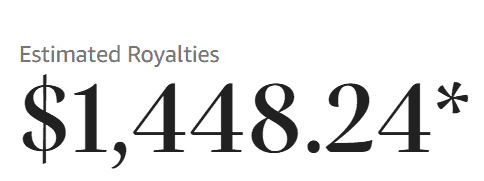
This is one of the simplest models to start, but it still requires strategy.
Using Amazon Kindle Direct Publishing, you can publish books that generate royalties over time.
At the beginning, each book might not make much.
But as you publish more, income starts to stack.
A portfolio of 5 to 10 well-performing books can already generate consistent monthly revenue.
The key is being intentional.
You don’t just publish randomly.
You focus on:
- Topics people are searching for
- Covers and titles that make people click
- Keywords that help your book get discovered
Once you find what works, you repeat it.
Some people scale to dozens of books.
Others focus on fewer, higher-quality ones.
If your KDP business reaches $10k–$30k/month with stable sales, it’s sellable.
Buyers like these businesses because they are low-maintenance.
But again, don’t rely on one book.
A portfolio reduces risk and increases value.
Here’s someone I recommend you to follow on X to get some free useful content about making money with KDP.
B2B Service Businesses (Turned Into Assets)
Service businesses are one of the fastest ways to generate cash.
But if you want to turn them into something valuable, you need to structure them properly.
At the beginning, you might be doing everything yourself.
But that can’t last.
You need to standardize your service, create clear processes, and build a team.
Instead of delivering everything personally, you manage the system.
That’s how you scale.
Examples include:
- Customer experience consulting
- Marketing agencies
- Lead generation services
Once your business reaches $30k–$50k/month with stable clients, it becomes attractive to buyers.
But only if it doesn’t depend entirely on you.
If you are the business, it’s hard to sell.
That’s why documentation, systems, and delegation matter so much.
Niche Sites and SEO Businesses
This is slower at the beginning, but very powerful over time.
You build a website that attracts traffic from search engines.
Then you monetize that traffic through display ads, affiliate links, or digital products.
At first, it feels like nothing is happening. Because, let me tell you this from experience, content takes time to rank.
But once it does, traffic can become stable and predictable.
A site generating $5k–$20k/month can be sold, especially if traffic is consistent and diversified.
Buyers like SEO businesses because they don’t rely on paid ads: the traffic is earned, which reduces ongoing costs.
But there is still risk.
Search engine updates can impact your rankings.
That’s why it’s smart to diversify traffic sources or build multiple sites.
The Core Principle Behind All of This
All these models look different, but they follow the same logic.
You build something that generates income without constant effort from you. You make that income predictable. And you reduce risk.
Then you either keep it and let it grow, or you sell it for a large amount.
That’s how people reach one million faster than expected.
Not by working more hours.
But by building something that works without them.
Investing With Capital (But You Need to Have Some Money Ready to Invest and Accept Risk)
This path is different.
If you already have $200k–$250k invested or ready to invest, especially in index funds, you can reach $1M faster if markets perform well in the next five years and you keep adding capital consistently.
But this is not controlled.
Markets don’t move on your timeline. A strong bull run can accelerate everything. A bad cycle can delay it for years.
To make this work in five years, you usually need to:
- Keep investing aggressively every month
- Take calculated risks when opportunities appear
- Understand market cycles, not just “buy and hold blindly”
This path requires patience and emotional control.
It’s less effort day to day, but more uncertainty overall.
High-Income Career Path (And Actually Keeping the Money)
There’s another path that’s common, but not easy: you earn so much from a job that you can reach one million in under five years.
But two things have to be true.
You need a very high income, realistically $300k–$500k+ per year. And you need to control your lifestyle…a lot.
That second part is where most people fail.
They earn more, then spend more. Nothing accumulates.
If you want this to work, you keep your lifestyle stable and direct a large portion of your income into investments and high-yield savings accounts.
For example, instead of constantly upgrading your lifestyle, you can leverage tools like premium credit cards such as American Express to accumulate points from expenses you’re already making.
Over time, those points can be used for flights, hotels, or even restaurants.
So you still get the experiences, but without constantly increasing your fixed costs.
That’s the difference.
You’re not depriving yourself. You’re optimizing how you spend.
Now, as for the roles that can get you there, think of senior positions like CEO, CFO, or VP in large companies such as Amazon, Google, Microsoft, where total compensation (salary, bonus, stocks) can reach those levels.
Another path is high-ticket, commission-based work like luxury real estate, where top agents can earn hundreds of thousands per year.
If you’re earning $400k+ and consistently setting aside $200k–$250k into investments or high-yield accounts, you’re already close to one million within a few years.
The strategy is simple (not easy, but simple).
Earn high. Keep more than you spend. Put your money to work.
But it only works if you don’t upgrade your lifestyle every time your income increases.
The Reality Most People Avoid
All of these paths have one thing in common.
They require intensity, focus, and a tolerance for discomfort.
There is no version where you stay in the same routine, avoid risk, work a normal job, and quietly become a millionaire in five years.
That’s the part most people avoid.
The Real Answer
Yes, it’s possible.
But it’s not random, and it’s not easy.
It’s a combination of leverage, speed, and making decisions most people delay for years.
For some, it becomes a plan.
For most, it stays a question.
Disclaimer
This article is for informational and educational purposes only. It reflects general strategies and real-world examples, not a guaranteed path to becoming a millionaire.
Results depend on your starting point, skills, decisions, market conditions, and how consistently you execute. Some of the approaches mentioned involve financial risk, business risk, and uncertainty. You can lose money, time, or both.
This is not financial, legal, or investment advice. Before making any major financial or business decisions, it’s worth speaking with a qualified professional who understands your specific situation.
Use this as a framework to think differently, not as a promise of outcomes.
Some of the links in this article are affiliate links, including links to Amazon. This means that if you click on a link and make a purchase, I may earn a small commission at no additional cost to you. I only recommend products that I genuinely believe can add value and support your productivity, focus, and business growth.
